How to Make a Mullein Salve the Old Appalachian Way
How I gather roadside mullein leaves each fall and turn them into a soft mullein salve — the infusing method, the straining trick, and one honest mistake.

Every September the ditches along the road down to Marshall fill up with mullein — tall grey-green spikes standing up out of gravel and cut bank where not much else wants to grow. My grandmother called it flannel plant, for the soft fuzz on the leaves, and she kept a crock of mullein salve on the shelf above the washbasin every winter I can remember. I still make it every year, the same way she did, with a couple of things she never had on hand — jojoba oil in place of hog lard, and a double boiler instead of the back corner of the cookstove.
Mullein isn’t from here, not originally. Verbascum thapsus came over with the first settlers, the way a good bit of what grows in an old homeplace dooryard did, and it has spread itself along roadsides and pasture edges and any scraped-bare patch of ground ever since. That’s one worry you don’t have to carry into this one. I dig ginseng and bloodroot with a conservation ethic drilled into me since I was a girl — take a third, leave two-thirds, mind the season and the law. Mullein asks none of that. It will be standing in that same ditch next September whether you cut an armload or walk on by.
Finding mullein on your own ground
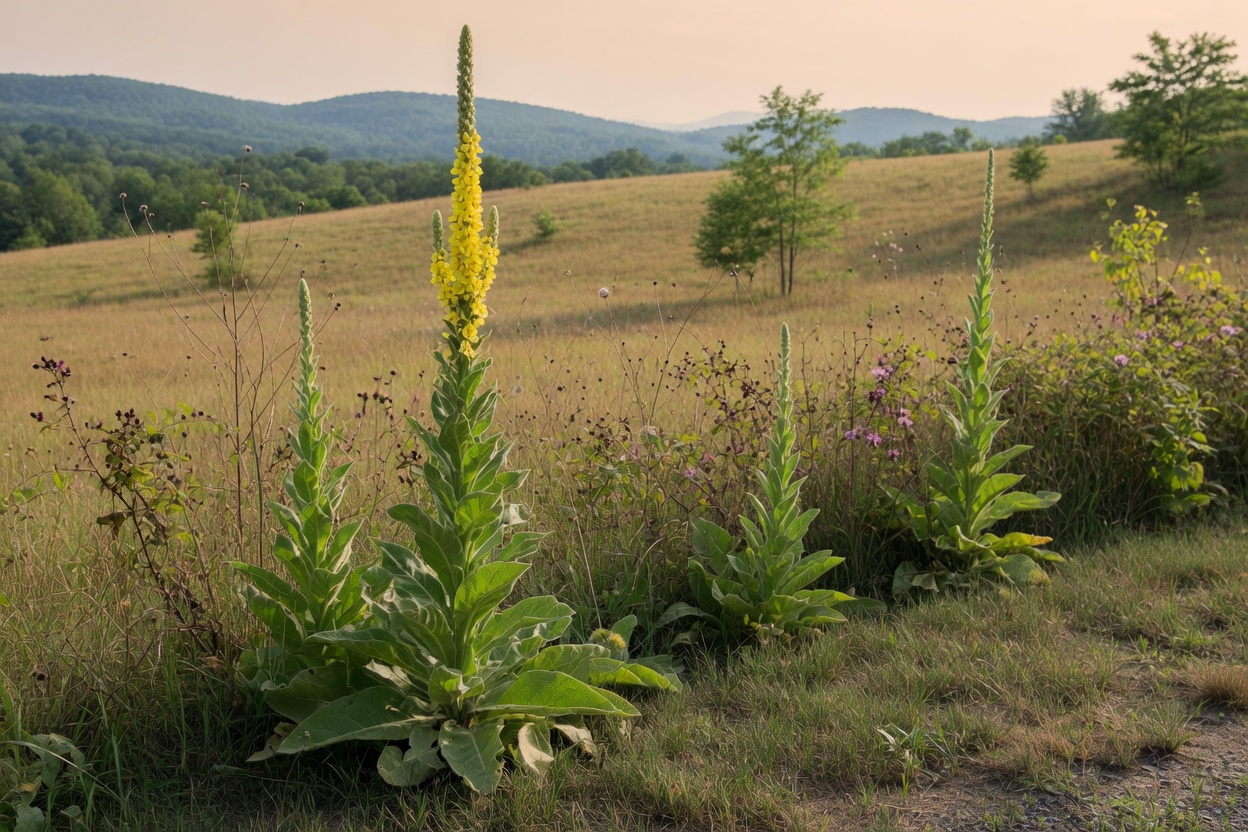
Mullein is biennial, which matters for harvesting. The first year it’s a low rosette of thick, felted leaves lying flat against the ground, no stalk at all. The second year that rosette sends up the tall flower spike people notice from the car, sometimes six feet or better, studded with small yellow flowers that open a few at a time up the stem. For salve I want the leaves, not the flowers, and I pick them off first-year rosettes or the lower leaves of a not-yet-flowering second-year plant — they’re more tender and there’s less woody stem to pick through.
Say the plain thing once, the way I was taught to: never work from one book, one app, or one person’s word alone. Confirm any plant you mean to use against more than one reputable source and, if you can manage it, an experienced local forager who’s handled the real thing in hand. Mullein is about as forgiving an identification as this hobby offers — that felted grey fuzz and the rosette shape aren’t easily confused with anything dangerous — but the habit of checking twice is the one habit that keeps you out of trouble on the plants that aren’t so forgiving. When in doubt, leave it standing.
I gather from midsummer clean through the first hard frost. Mullein leaves hang on later into the fall than most of what I pick, which is exactly why I make this batch in October — it’s one of the last harvests before the ground shuts down for the winter, and the salve is ready right about when chapped hands and windburned faces start showing up at my kitchen table.
Infusing the oil
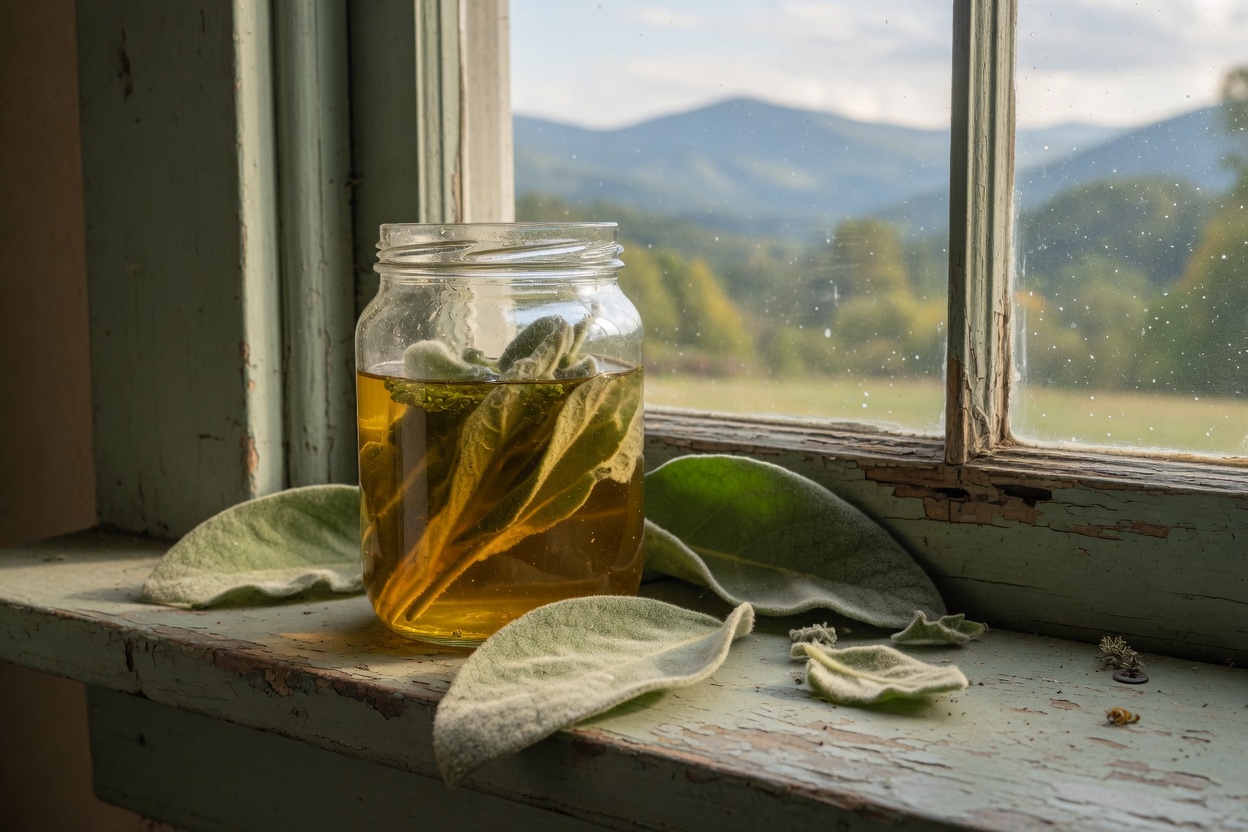
Chop the leaves rough — you’re not making tea, you don’t need them fine — and pack them loosely into a clean jar, no more than two-thirds full. Pour jojoba oil over them until they’re fully covered with an inch to spare, cap it, and set it in a warm windowsill for two to three weeks, giving the jar a shake most days you think of it.
If you’re impatient the way I sometimes am, a double boiler does the same job in an afternoon: low heat, oil and leaf together, two to three hours, checked often so it never gets hot enough to fry. Either method pulls the same green-gold color out of the leaf. I’ve done it both ways more years than I can count, and I’ll tell you honestly — the slow windowsill jar makes a slightly better-smelling oil, but the double boiler is what gets done on a day when I’ve got six other things on the stove already.
Straining — the part people skip and regret
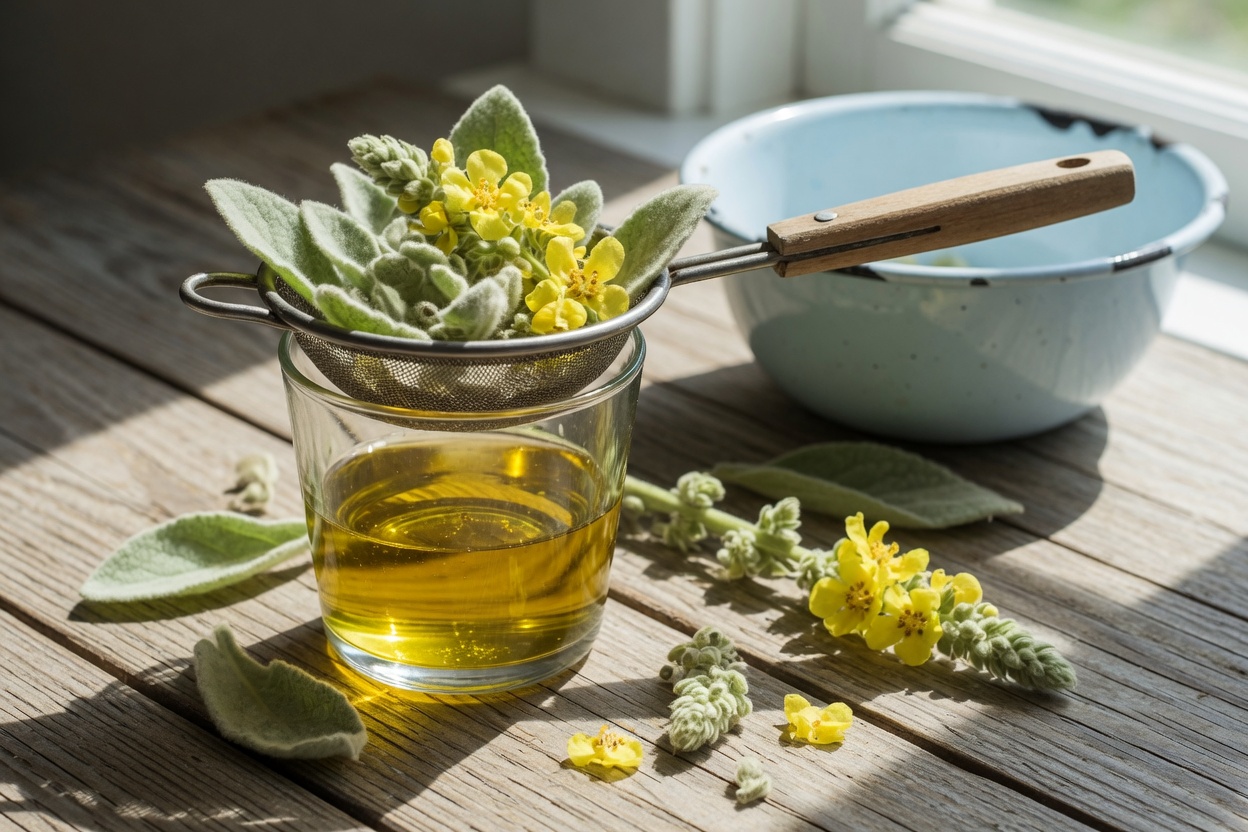
Here is where I lost a whole batch my first year making this, and it’s the mistake I pass along every time somebody asks me about mullein. Those soft-looking leaf hairs are exactly what makes mullein feel like flannel in your hand, and they are also fine and sharp enough to work into skin and throat tissue and cause a real itch if you don’t strain the oil thoroughly. I rushed a batch once, strained it through a single loose layer of cloth, and spent two days sneezing every time I opened that tin.
Line a bowl with doubled grade-90 cheesecloth — the tighter weave catches what a looser cloth lets through — and pour the whole jar through it. Gather the corners and wring the spent leaf hard. There’s more oil hiding in there than you’d guess, and it’s worth the effort of the last squeeze.
Turning the oil into salve

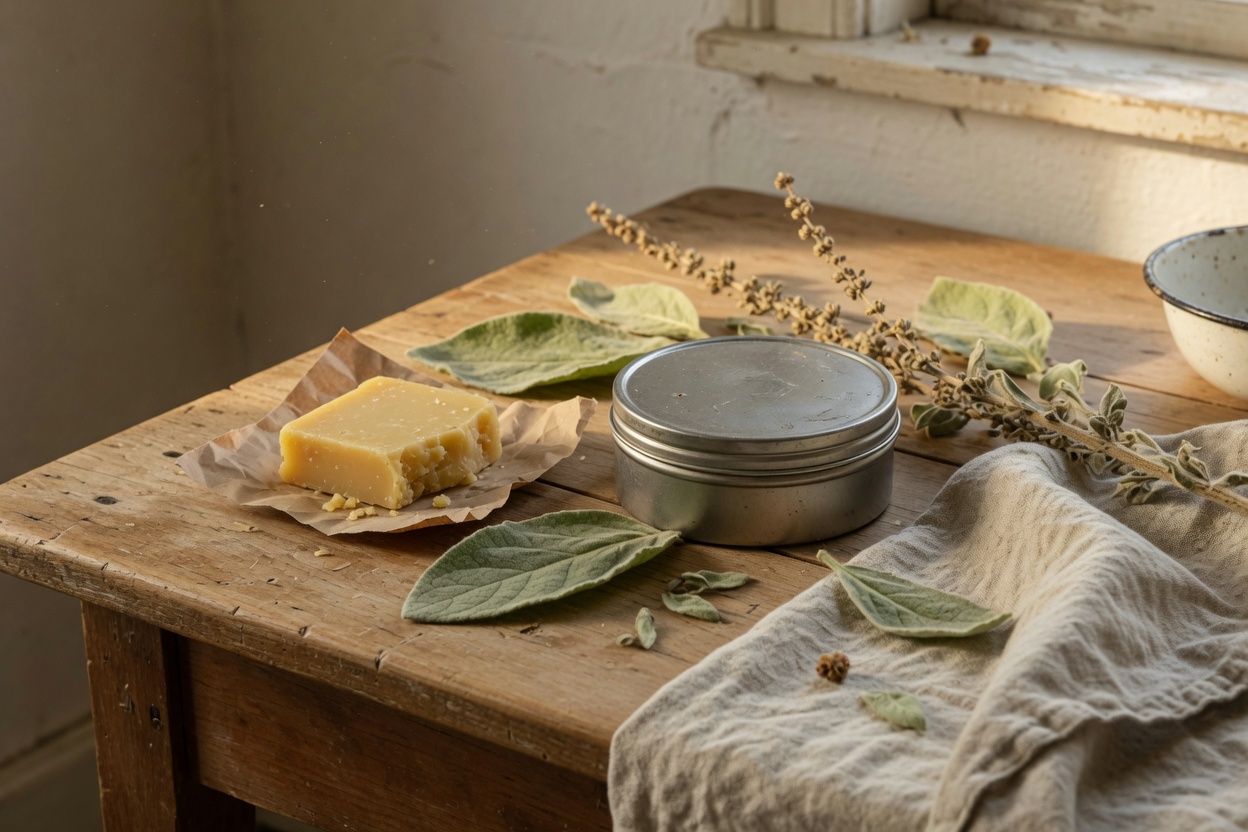
For every cup of strained mullein oil, melt in about an ounce of beeswax over low heat, stirring until it’s fully dissolved. That’s roughly the ratio my grandmother used with her lard, and it sets up firm enough to hold its shape in a tin but soft enough to scoop with a fingernail. If you want it softer for winter use, when a firmer salve won’t spread on cold skin, back the beeswax off by a quarter and test a spoonful on a cold saucer before you commit the whole batch — it firms up in seconds and tells you exactly what you’ll get.
Pour it warm into 2oz tins and let them sit undisturbed until they’ve gone solid, which takes an hour or so at room temperature. Label the lid with the plant and the month. I keep a stack of these on the shelf every winter, one by the kitchen sink and one in the truck, for the kind of dry, cracked, windburned skin that shows up on a mountain in December and doesn’t ask permission.
What this salve is, and what it isn’t
I want to say this plainly, because I don’t like to see it said any other way. This is a traditional skin salve, the kind my grandmother’s generation kept on hand for dry hands and rough, weathered skin, made the way mountain women have made it for longer than anybody’s kept written record. It is not a medicine with a dose, and I’m not going to tell you it treats anything in particular. What I can tell you is that I’ve rubbed it into my own hands every winter for thirty-some years, and it’s never once let me down for what it is.
A jar of this makes a fine gift, too, if you’re the kind of person who likes handing something homemade across a kitchen table instead of buying it wrapped. Just don’t expect it to last past February around here — mine never does.
Where I learned the rest of it

The salve is the easy part, once you’ve made your first batch and lost your first one the way I did. Knowing which plants are worth this kind of trouble in the first place — which ones are common as mullein and which ones need a third-and-two-thirds conservation ethic behind every dig — is the longer education, and it’s most of what’s in my book, Appalachian Medicinal Plants. It’s the deeper resource I’d hand a neighbor who wanted to go further than one salve recipe — identification, season, and traditional use for the plants that actually grow on this mountain, the ones that ask for care and the ones, like this one, that don’t ask for much at all.
