How to Forage and Use Ramps Without Losing the Patch
Forage ramps the mountain way: how I find wild leeks in the coves, tell them from a leaf that can kill you, harvest so the patch survives, and put a few up.
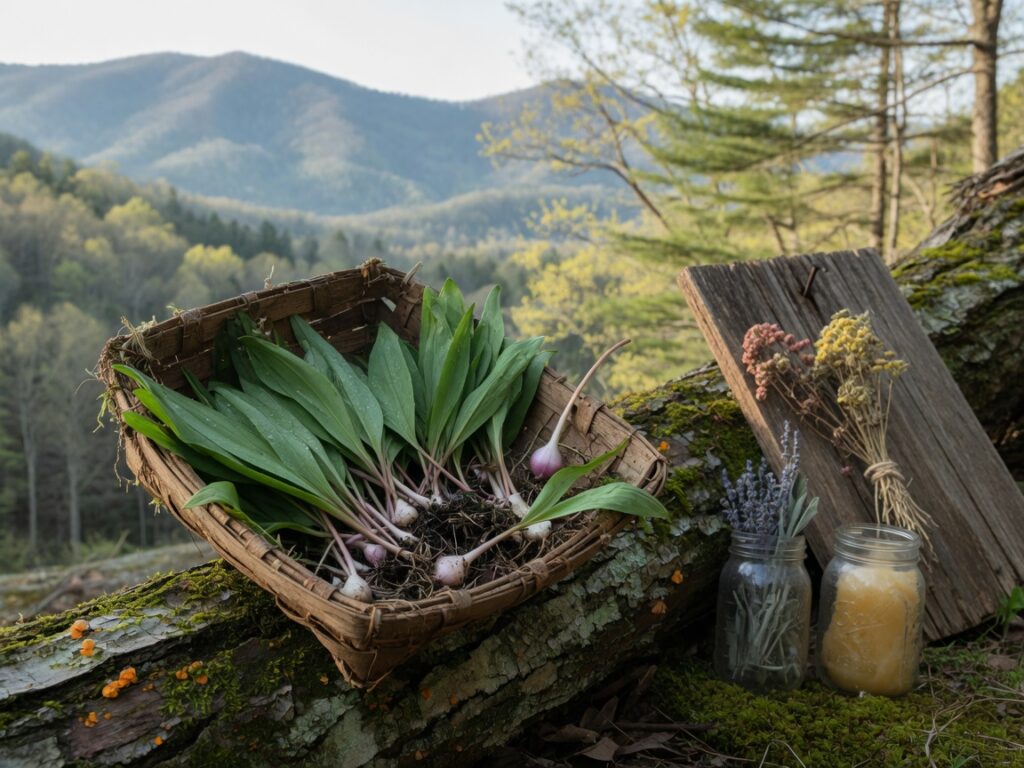
There is a week, usually the third or fourth in April, when the coves below the gap go green underfoot almost overnight. Ramps come up in broad soft leaves along the wet north slopes, and if you crush one between your fingers the whole hollow seems to smell of onion and garlic at once. I have gathered them off this same mountain outside Marshall since I was a girl walking behind my grandmother, and I will tell you plainly: ramps are one of the most beloved wild plants in these mountains, and one of the easiest to love to death.
So this is how I forage ramps — Allium tricoccum, what we’ve always just called ramps, the wild leek — and just as important, how I take them so the patch is still there for my grandchildren. The two halves of that sentence carry equal weight. A ramp patch is not a crop you planted. It is a slow, old thing, and it does not forgive a careless spring.
Where and when ramps grow
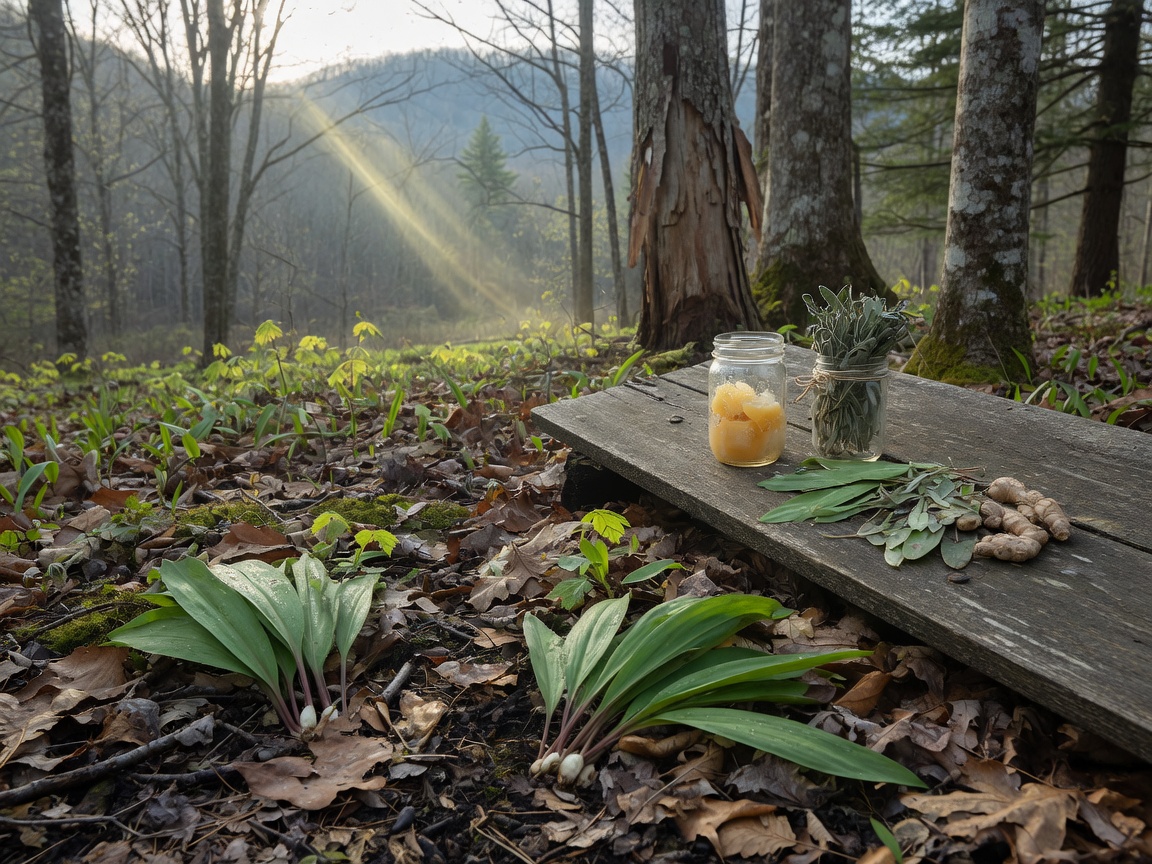
Ramps are a plant of the rich cove hardwood forest — the moist, shaded, north- and east-facing slopes under sugar maple, basswood, yellow birch, and tulip poplar, usually near a seep or the head of a creek where the ground stays damp and the leaf litter is deep and black. Down low in the mountains they come up in late March; up high on a cold north slope I’ve found them still fresh into May. They are a spring ephemeral, which is the whole key to their character: the leaves are only up for a few weeks before the trees leaf out and shade them off, and by early summer the green is gone and only a flower stalk remains.
Learn the habitat and you’re most of the way to the plant. Ramps grow in colonies, often great sweeps of them across a slope, and they grow in the same spots year after year. If your grandmother’s patch is still producing, it’s because somebody before you took care of it.
How to know a ramp — and the leaf that can kill you
The rule I follow and won’t bend on: never eat any wild plant on the strength of one book, one app, or one confident afternoon. Confirm it against more than one reputable source and, better, put it in the hand of somebody who has gathered it for years. When in doubt, leave it. I’ll say that once and trust you to carry it.
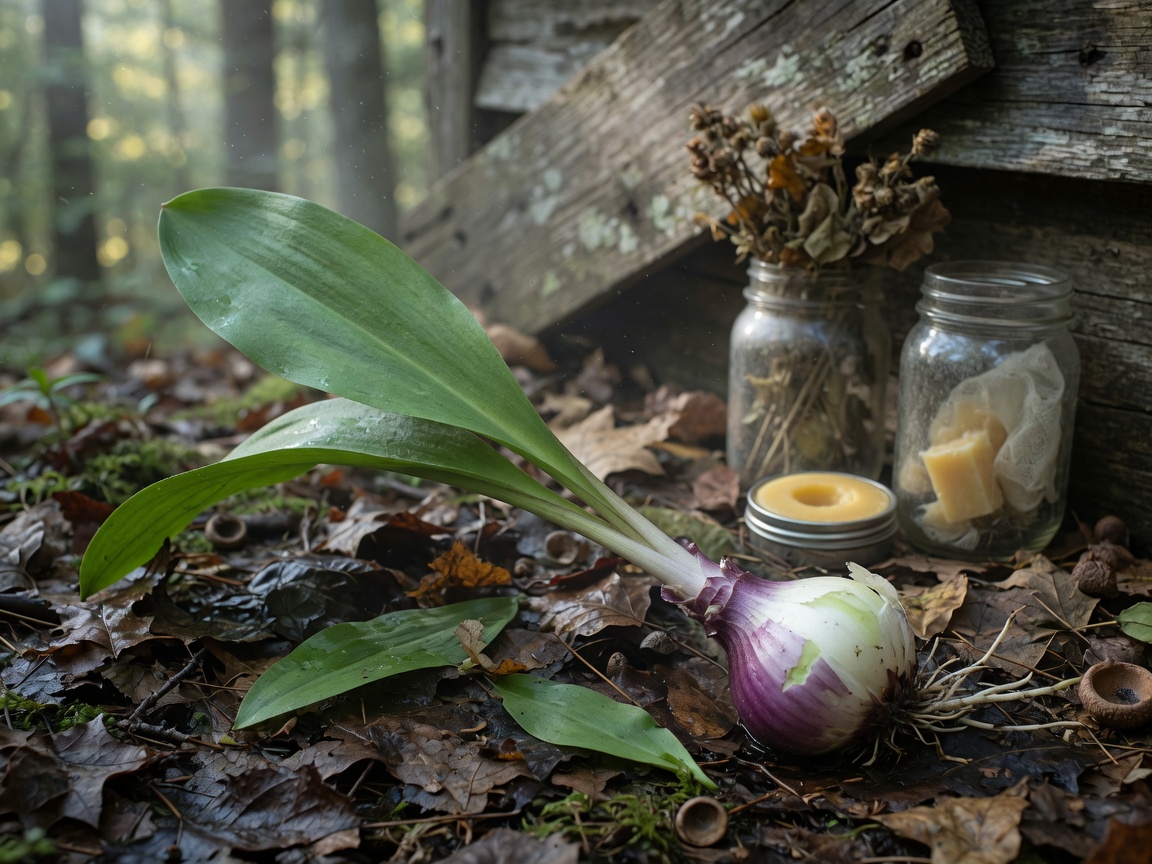
A true ramp gives you clear tells. It has one to three smooth, broad, flat leaves — the shape of a lily-of-the-valley leaf, elegant and unribbed — rising from a white, scallion-like bulb with fine roots. Most tellingly, the lower stalk where the leaf narrows to the bulb is flushed a deep burgundy or maroon. And the smell settles it: bruise a leaf and it is unmistakably onion, unmistakably garlic. Nothing dangerous in these woods smells like that.
You must know the ramp because two plants that share its ground can seriously hurt you, and one can kill you. Lily of the valley (Convallaria majalis) has that same broad smooth leaf but no burgundy stalk, no bulb, and no onion smell — it is toxic, and the smell test is what separates them. Far more dangerous is false hellebore (Veratrum viride), which comes up in the same wet cove ground at the same time. Its leaves are large, and heavily pleated — ribbed like an accordion or a folded fan — where a ramp’s leaf is smooth as a spoon. False hellebore is violently poisonous, and people have died confusing the two. Go by the smooth leaf, the burgundy stalk, the bulb, and the onion smell together, every time. Never one tell alone.
Harvest so there’s a patch next year
Here is the part most articles skip, and the part that matters most. A ramp grows slowly — five to seven years from seed to a plant big enough to gather. Dig a whole colony and you have not harvested it; you have ended it, and it will not come back in your lifetime. Commercial digging for restaurants has already stripped mountain after mountain. The Great Smoky Mountains National Park closed ramp harvest entirely back in 2004 after their own study showed the patches collapsing. That is how fast it goes.
The way I was taught, and the way I harvest now, is gentler than digging and better for you both:
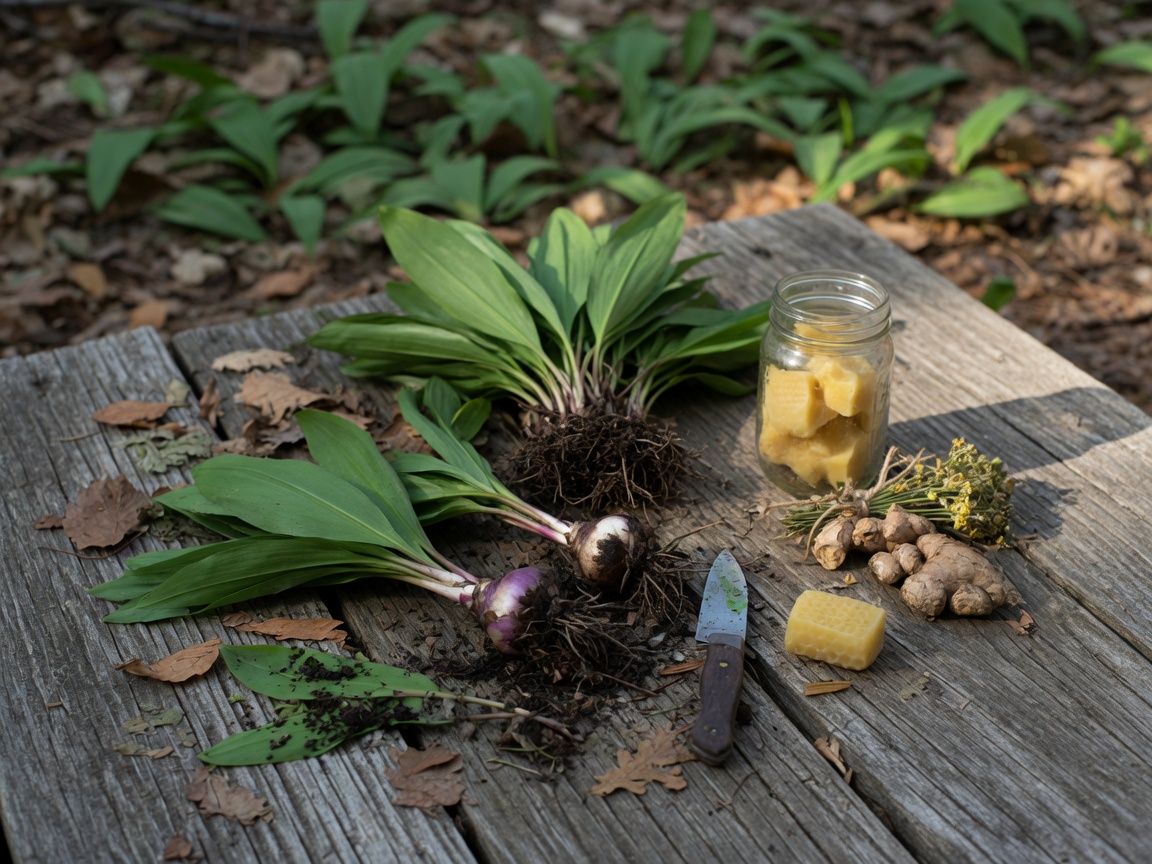
– Take the leaf, leave the bulb. Cut one leaf from a plant with two or three, with a knife, right at the ground, and leave the rest to feed the bulb. The plant keeps growing, the colony holds, and you can come back to the same slope every spring. One leaf per plant, moving through the patch, gives you all the ramp flavor you can use.
– If you dig bulbs at all, dig lightly. Never more than a small fraction of a large, thriving patch — I take no more than one plant in ten, and only from a strong colony, never from a small or struggling one. Loosen the soil, take a few, firm it back, and replant any bulblets and the little seed heads.
– Take a third and leave two-thirds was my grandmother’s whole rule for the mountain, and it still holds.
– Know the law and the land. Ramps are protected or banned in some national parks and require permits on much of the national forest; get permission before you gather on anyone’s ground, your own family’s included. This isn’t red tape. It’s the difference between a tradition that lasts and one that’s gathered into memory.
None of that is preaching. In these mountains, taking care of a patch has always been simple competence — the same as knowing not to shoot out a spring or foul a well.
Ramps as a spring tonic — the old use
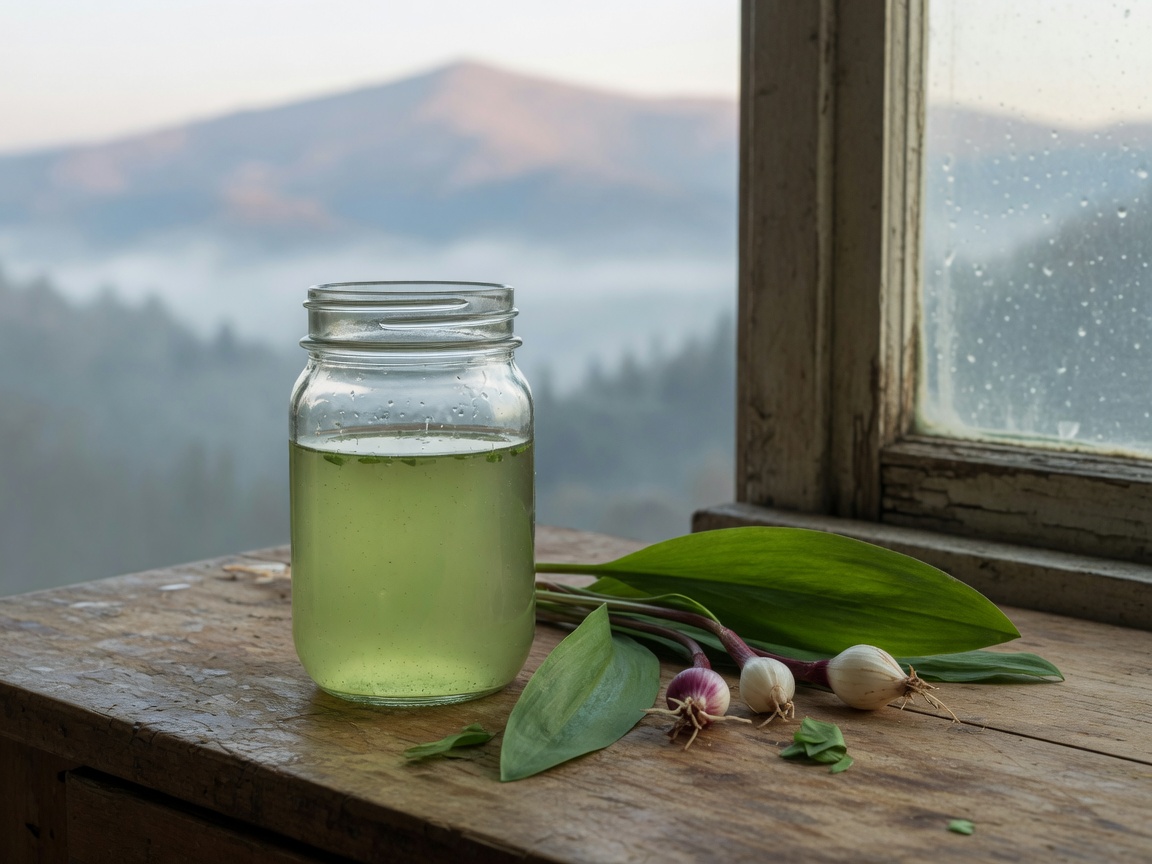
Ramps were never only food here. They were the first strong green after a winter of dried beans, cornmeal, and whatever was left in the root cellar, and the mountain people ate them hard in early spring as a tonic — a cleaning-out, a waking-up of the blood, the way they understood it. That’s the traditional use, and I’ll keep it traditional: this is what ramps have been eaten for, generation on generation, not a prescription for anything. For anything that actually ails you, see a doctor. Ramps are a spring green with a long history, and that’s honest enough.
The Cherokee — the Aniyvwiya, the Eastern Band whose homeland these mountains are — gathered ramps in spring as food and tonic long before my people ever came over the gaps. That knowledge is theirs, well documented in Cherokee ethnobotany, and I name it as theirs. Whole mountain towns still hold ramp suppers and festivals every April — the Ramp Convention over in Haywood County, the old feeds across the line in Cosby — and every one of them sits on that older root.
How I put a few up
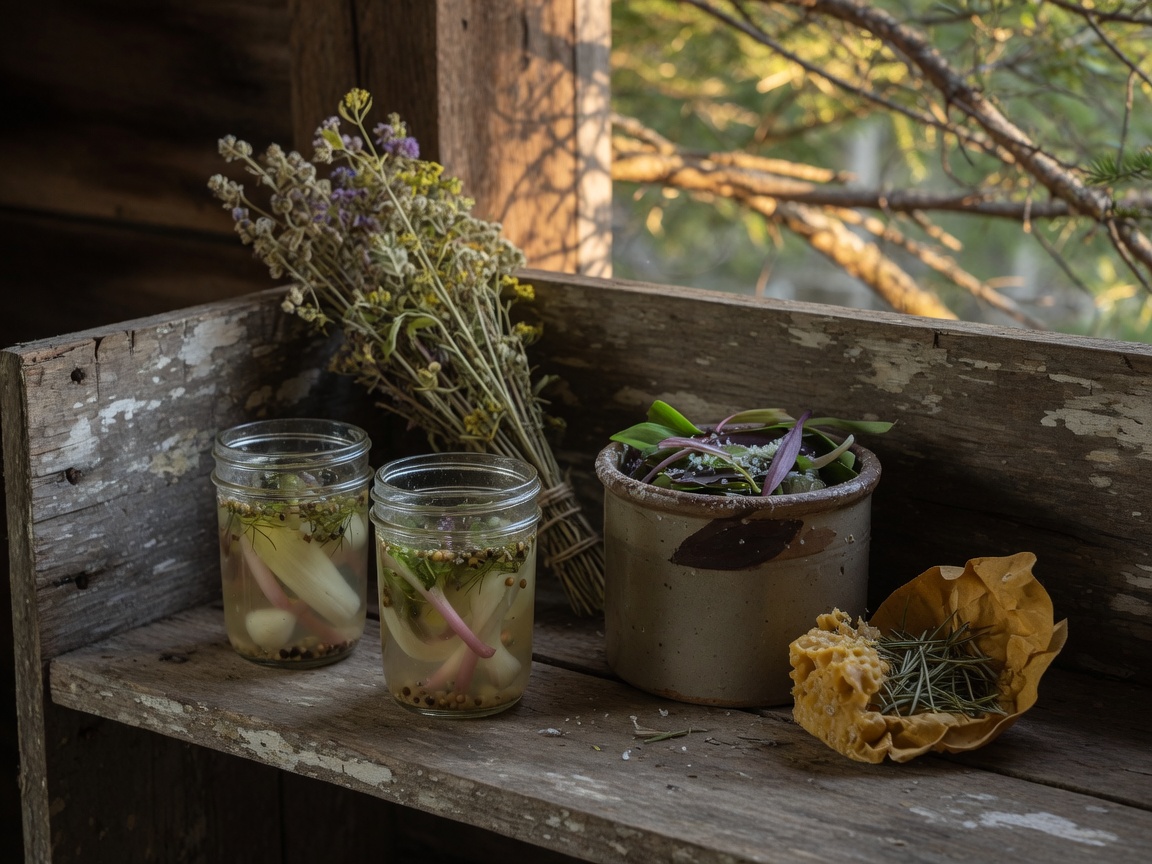
Fresh is best, and ramps don’t keep long in the green, so most of what I gather goes straight into the skillet or a pot of spring greens within a day or two. But a handful I always put up for later in the year, when the leaves are only a memory.
I dry a portion of the leaves — spread thin, out of the sun, until they crumble — and grind them with coarse salt into a green ramp salt that carries the whole spring into December. Others I lay down in a jar of good vinegar for a few weeks and strain it clean through cheesecloth, which gives a sharp, oniony vinegar for beans and cooked greens all year. Both are old habits of the mountain kitchen, and both are a way to make a small, careful harvest last — which is exactly the point. If you’re building out a home apothecary and pantry for this kind of putting-up, I walk through the salve and jar work I keep on hand in another piece; the same drying-and-straining habits carry straight over to ramps.
If you’re still getting your eye in on mountain plants, don’t start in the pressure of ramp season with a look-alike that can hurt you. Start slow and in the quiet months — I put together what to look for through the winter so the ID habit is already yours by the time April rushes the coves.
Ramps reward the person who learns the whole plant — the slope it likes, the leaf that mimics it, the season, and the harvest that keeps the patch alive. That’s the way I try to teach every plant, and it’s most of what I put into my book, Appalachian Medicinal Plants: how to know the plants of these southern mountains without guessing, when to gather them, how the people before us used them, and how to take them so there’s something left to gather. Ramps are the easy door into that April. The book is how you learn which coves to walk into next, and which to leave be.
