Foraging for Beginners: How to Start Without Poisoning Yourself
A safety-first beginner's guide to foraging — the rules that keep you whole, the few tools worth carrying, and how to start small without poisoning yourself.
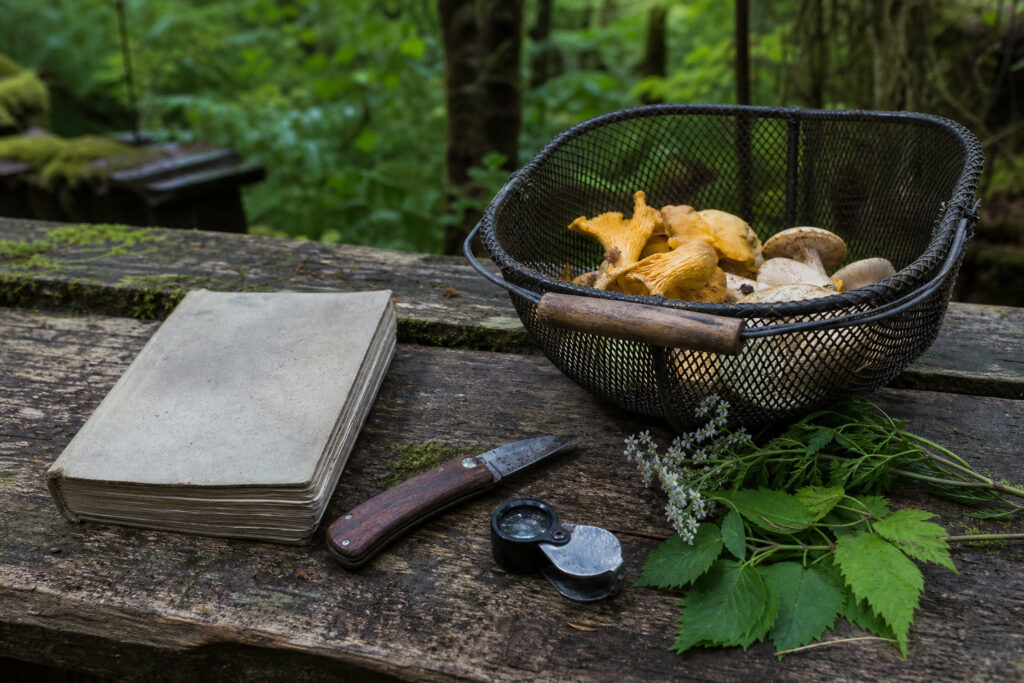
Foraging is one of the oldest things people do, and for almost all of human history nobody needed a blog post to start. You learned it standing next to someone who knew, in the place where the plants grew, season after season, until the knowledge was in your hands. Most of us don’t have that person anymore. So we start from books and websites and a great deal of caution, and that’s a fine way to start — as long as the caution comes first.
I’ve foraged the Olympic Peninsula for thirty years, and I’ll tell you the truth I tell everyone who asks how to begin: the goal of your first year isn’t to gather a lot. It’s to come home every time exactly as healthy as you left. Once you’ve internalized that, the rest is just patience and practice. Here’s how I’d start you, and the few things worth carrying.
The one rule that keeps you whole
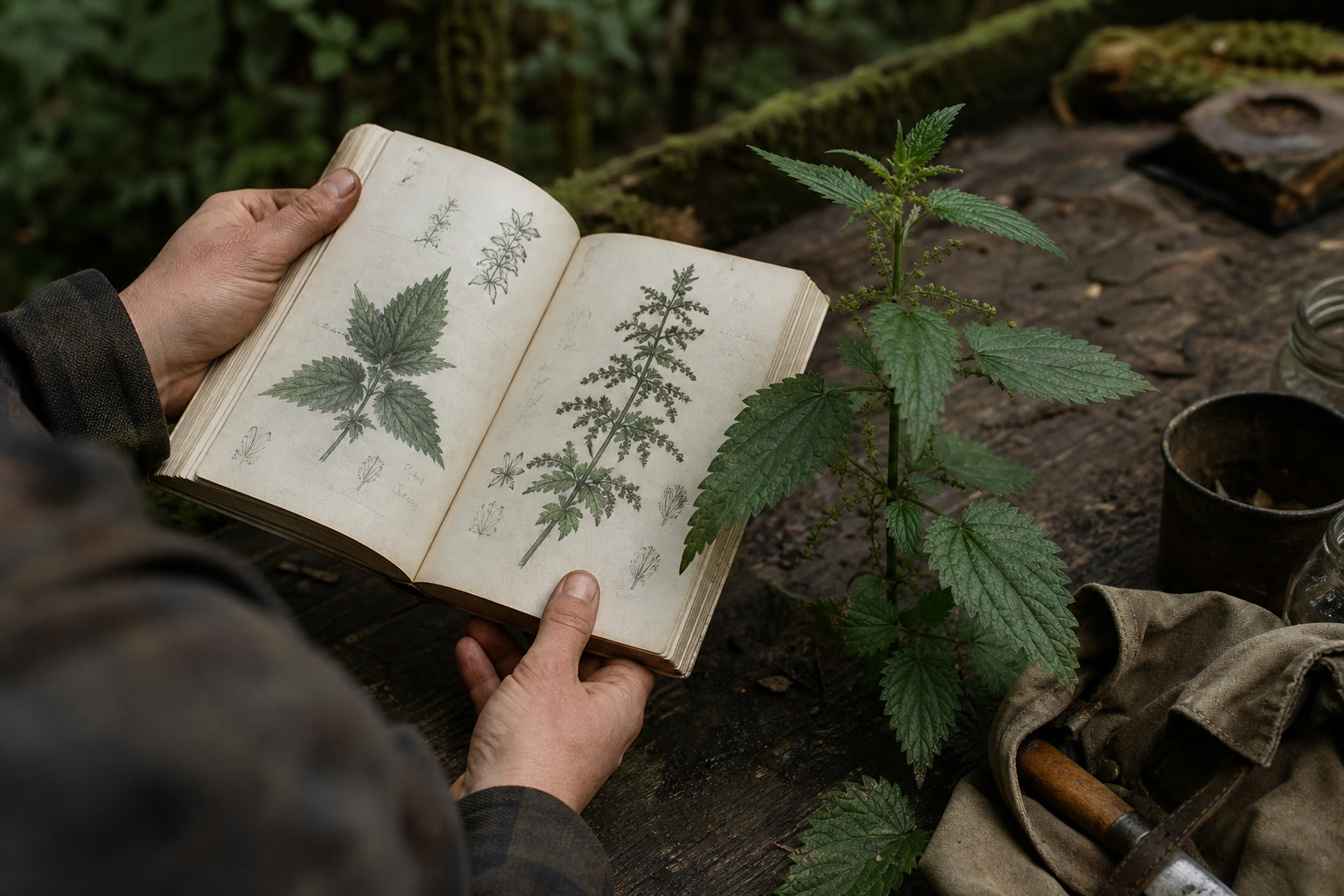
Here is the rule, and I’ll state it plainly because it’s the one that matters more than all the rest combined: never eat any wild plant or mushroom identified from a single source. Not one book, not one app, not one confident stranger. Confirm every identification against at least two reputable guides, and when you’re new, against an experienced local forager who can stand next to the plant with you. When in doubt, throw it out.
Two plants on this coast can kill you, and both look, to a hurried eye, like something you’d want to eat. That sentence is the whole reason for the loupe, the field guide, and the slowing-down. Identification is the entire job. Everything else is just carrying things home.
I’ll say one more hard thing and then trust you to handle it like the adult you are: a plant you’re only ninety percent sure of is a plant you don’t eat. There’s no partial credit out here. The hundred-percent confidence is the only kind worth acting on.
Start with the unmistakables
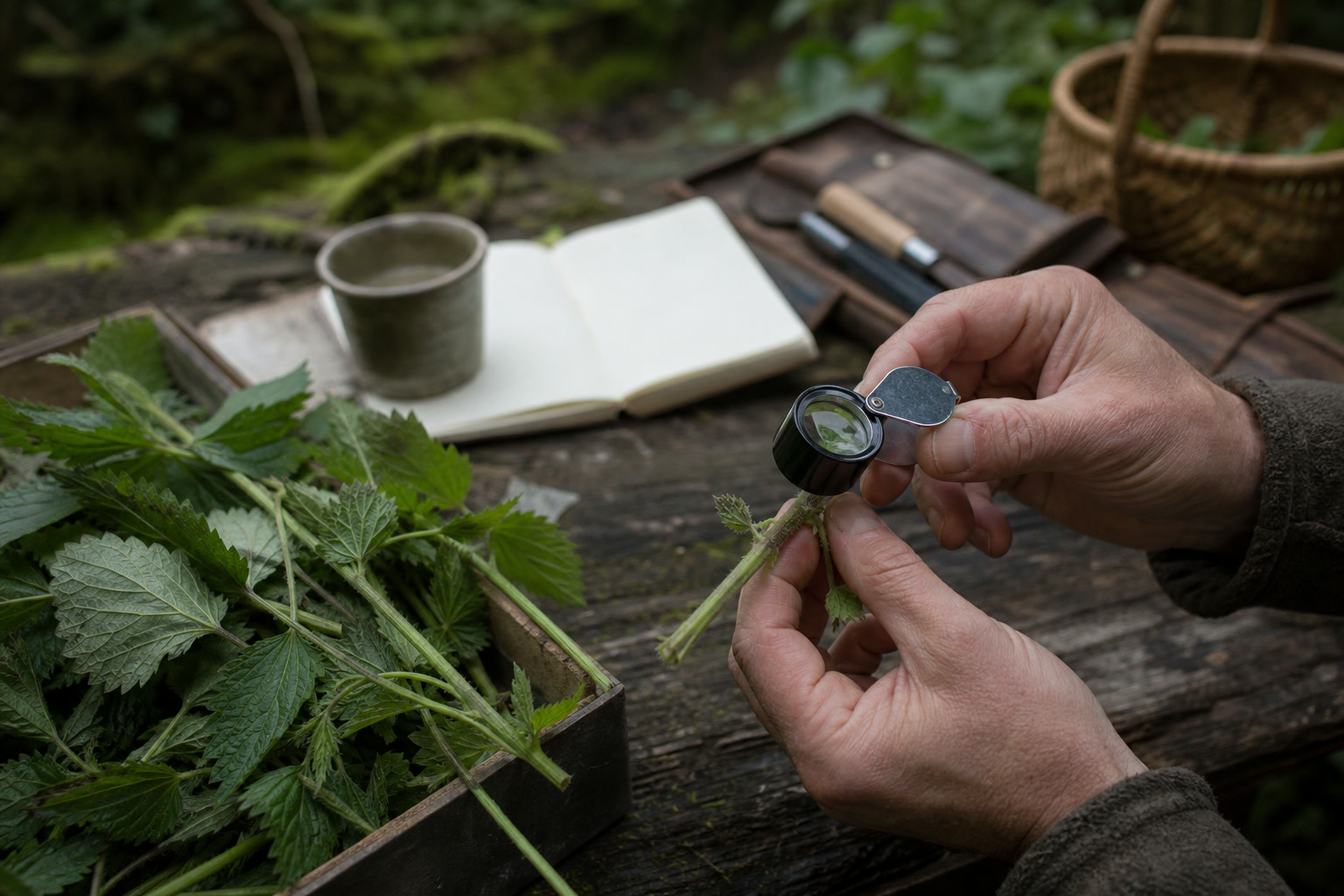
The fastest way to build real confidence is to begin with plants that have no dangerous look-alikes. Nettle, dandelion, blackberry, plantain — these are forgiving teachers. They’re abundant, they’re easy to identify with certainty, and the worst outcome of a misidentification is mild disappointment rather than a trip to the emergency room. Learn three or four of them cold, in their place, across a full season, before you reach for anything trickier.
This is where a beginner regional field guide earns every dollar. Buy one written for your region specifically — a guide for the wrong part of the country will mislead you on the plants that overlap. Read the entry, then go find the living plant and check it against the page detail by detail. Then check it against a second source. The book is where you start the identification, never where you finish it.
See the small things: a loupe
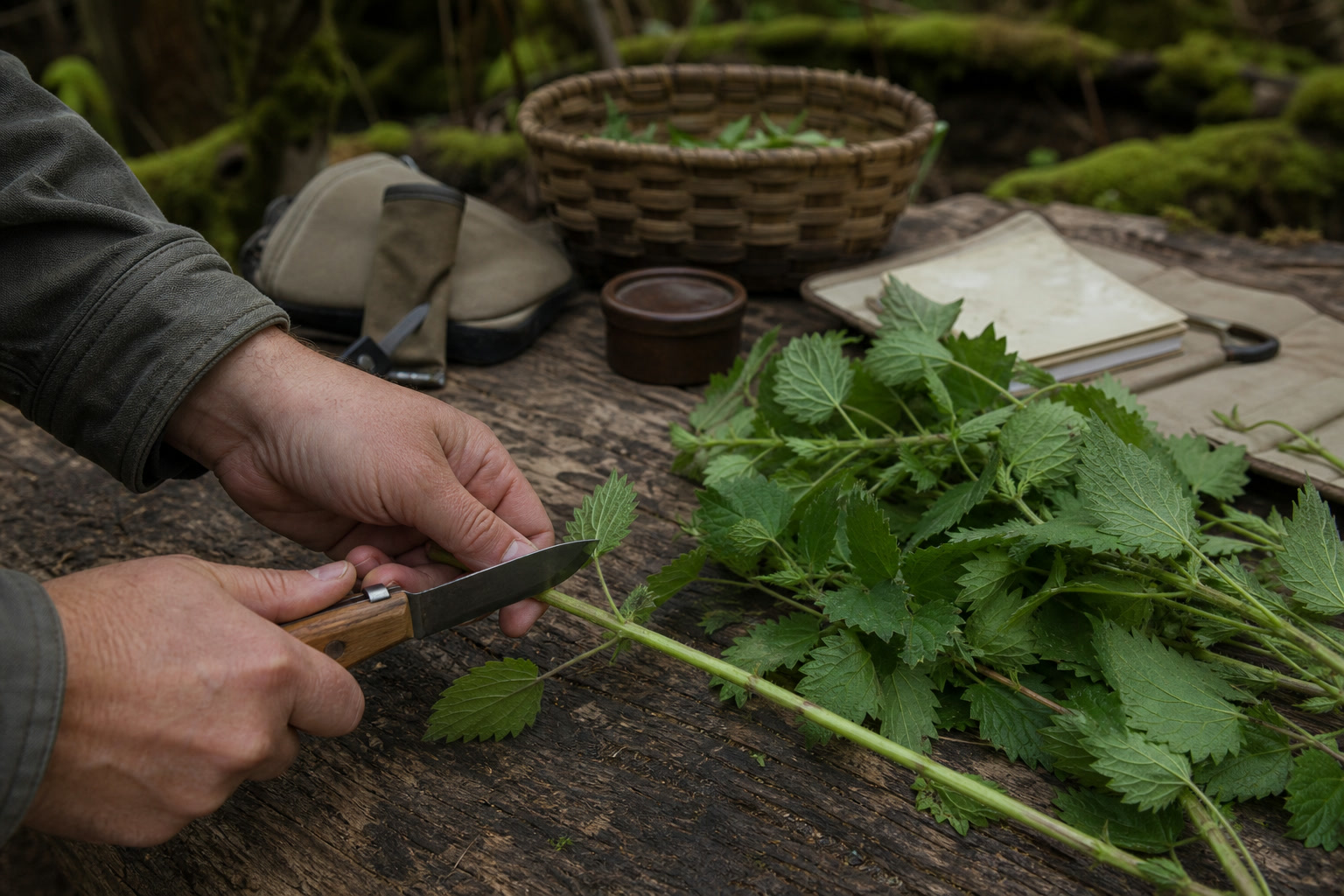
The features that separate a plant you want from a plant that’ll hurt you are often tiny — the hairs on a stem, the shape where a leaf joins the stalk, the structure of a seed. A 10× jeweler’s loupe costs about as much as a sandwich and lets you actually see them. More than that, it forces you to slow down and look closely, which is the single most protective habit a beginner can build.
I’ve carried the same kind of loupe for years. It’s the cheapest tool in my kit and arguably the most important, because identification lives in the details and the details are small. Trust your identification, confirmed and re-confirmed. Never trust your intuition — intuition is exactly what gets people hurt.
Cut clean: a good folding knife
Once you’re certain of a plant and ready to gather it, cut it cleanly rather than tearing it. I carry an Opinel No. 08 — a simple French folding knife, made the same way since 1890, sharp enough to slice a stem without crushing it. A clean cut is better for the plant you’re leaving behind (a torn stem invites rot) and better for what you’re taking home (a crushed stem starts to spoil on the walk back).
The carbon-steel version takes a beautiful edge but will rust if you put it away wet, which I’ve done more times than I’ll admit. Wipe it dry before it goes in the drawer, or buy the stainless version and skip the fuss. Either way, a thin sharp blade beats a heavy one for the delicate work that most foraging actually is.
Carry it home properly: a basket
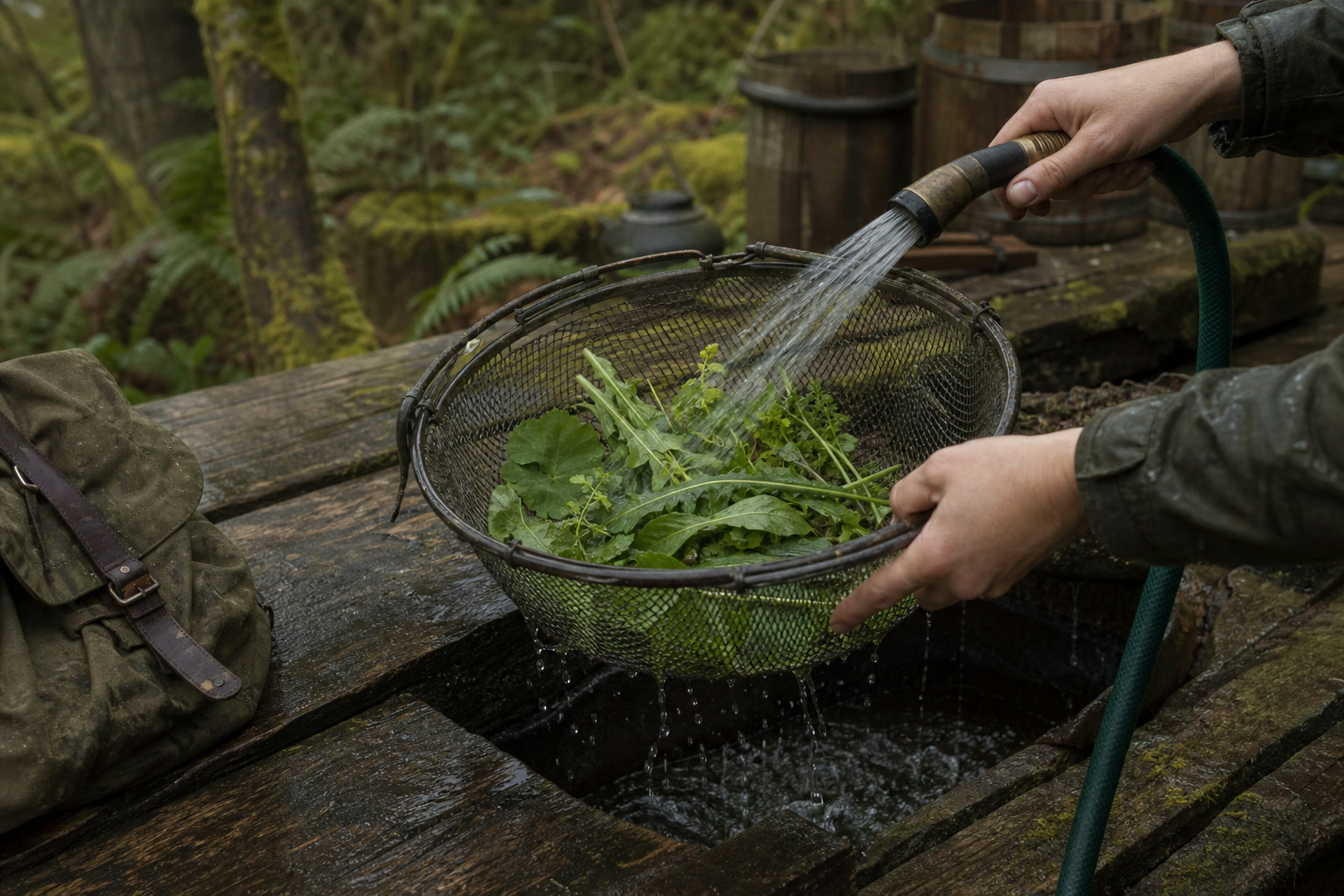
A pile of soft greens crushed in the bottom of a plastic bag is a sad thing to come home to. I carry a harvest basket — an open mesh that lets air move through the harvest so it doesn’t sweat and wilt, and lets me hose the day’s grit off before any of it comes inside. It’s not a strictly necessary tool; a bucket carries more. But greens that arrive home crisp instead of crushed are greens you’ll actually use, and that’s reason enough.
Don’t gather more than you’ll process in a day or two, basket or not. A beginner’s instinct is to take everything; a forager’s discipline is to take only what you’ll honor. The plant patch will be there next week, and the one after that, if you don’t strip it bare.
The kit is the easy part
A field guide, a loupe, a knife, a basket — that’s a complete beginner’s foraging kit, and none of it is expensive. But the gear is the easy part. It gets you into the woods and home again without hurting yourself. It can’t tell you which plant is which, when to gather it, or what the generations before us did with it once it was drying on the counter.
That knowledge is what I spent thirty years gathering, and most of it is in my book, Pacific Northwest Medicinal Plants — 115 wild herbs of this coast, how to identify each one without guessing, when to gather it, and how to use it safely. Read it alongside the other guides on your shelf, never on its own. The kit gets you out the door. Knowing your plants — confirmed, cross-checked, never guessed — is how you come home with the right one.
