The 5 Tools I Never Forage Without (and the One That’s Just for Pretty Pictures)
After thirty years foraging the Olympic Peninsula, here are the five tools I actually carry — a knife, a digger, gloves, a loupe, and one I keep mostly for looks.
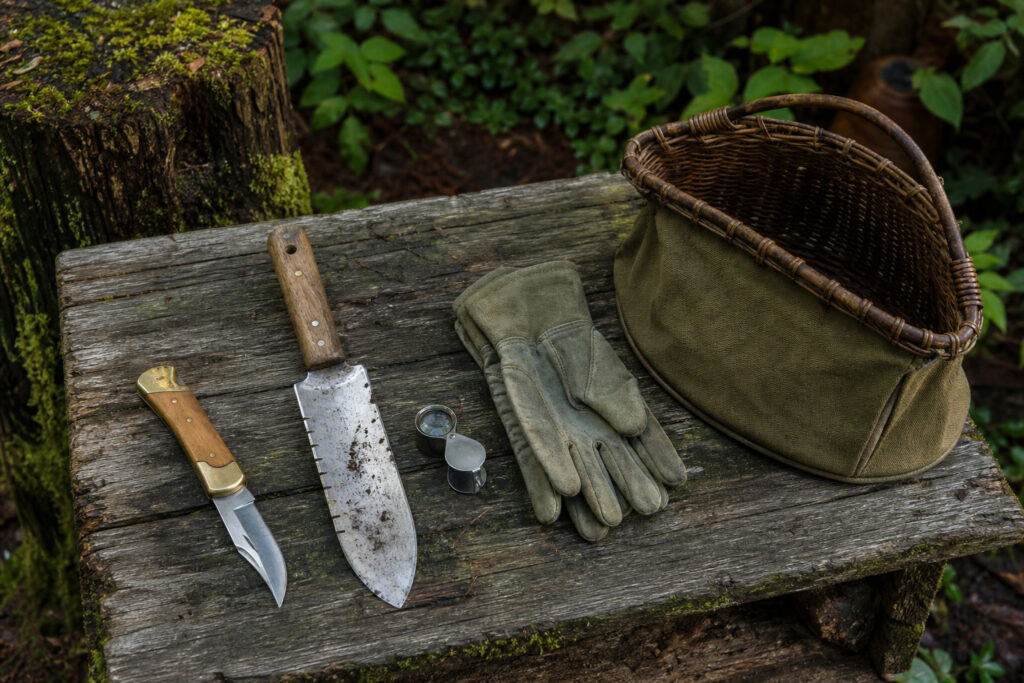
I have foraged the same few miles of the Olympic Peninsula for going on thirty years, and I have hauled a great deal of useless gear into the woods in that time. Heated debate with myself over folding saws. A canvas bag that grew mildew in a week. What follows is what survived all of it.
These are the five tools I actually reach for when I head out to dig nettle in March or cut elderflower in June. Four of them earn their place every single trip. The fifth I keep packing for reasons I’ll be honest about at the end.
A good folding knife
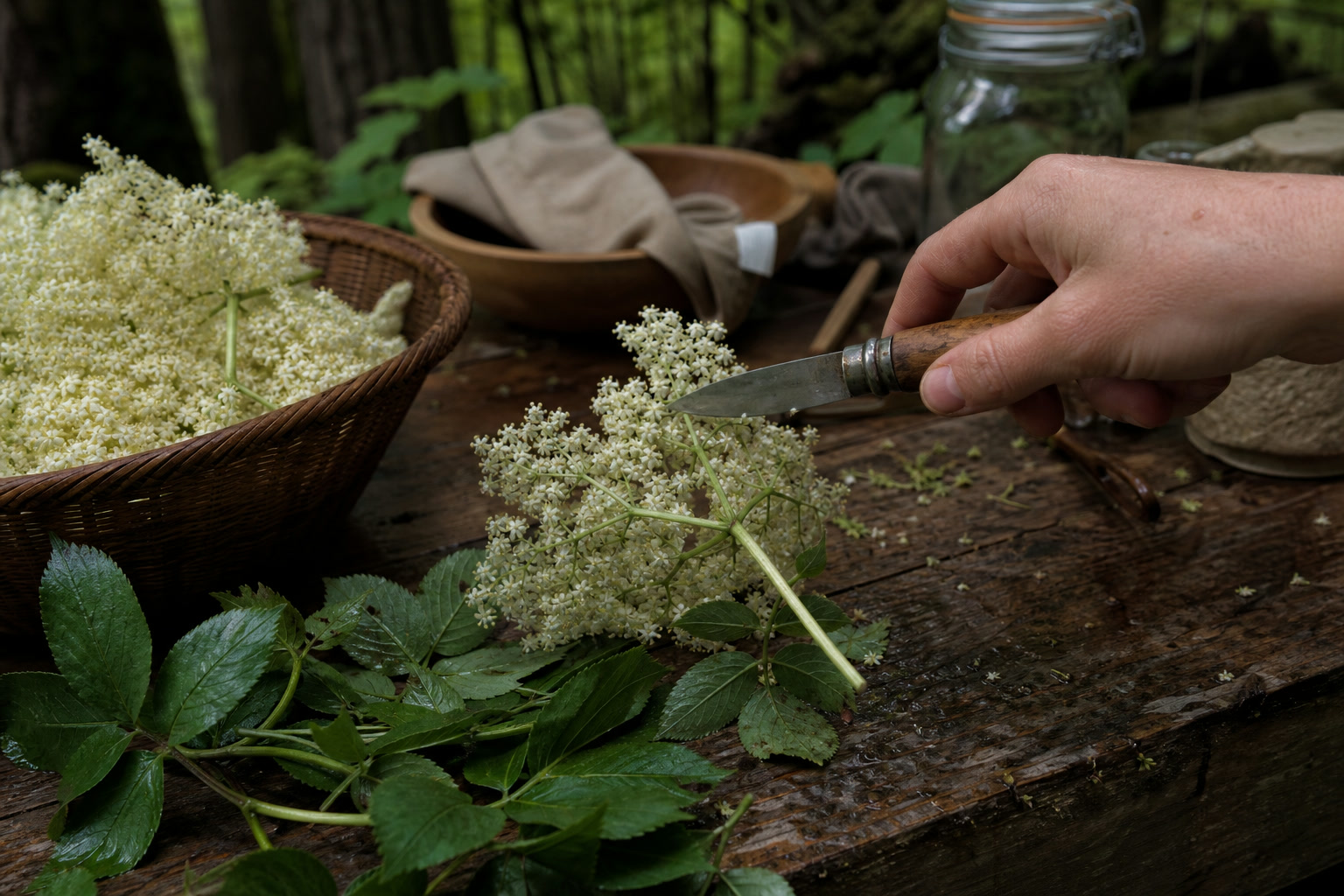
I carry an Opinel No. 08 in carbon steel. It is not a fancy knife. It has been made the same way in France since 1890, it costs about what a sandwich and a coffee do, and it takes an edge sharp enough to slice an elderflower umbel off cleanly without bruising the stem.
That clean cut matters more than people expect. A torn stem invites rot into the plant you’ve left behind, and a crushed flower head loses half its pollen on the walk home. For delicate work — flowers, soft leaves, mushroom caps if that’s your thing — a thin, sharp blade beats anything heavier.
The carbon steel is the one honest drawback. It will rust if you put it away wet, and I have ruined more than one blade by being lazy at the end of a long day. I wipe it down before it goes in the drawer. If that sounds like more maintenance than you want, the stainless version exists and I won’t think less of you for it.
A digging knife (the hori-hori)
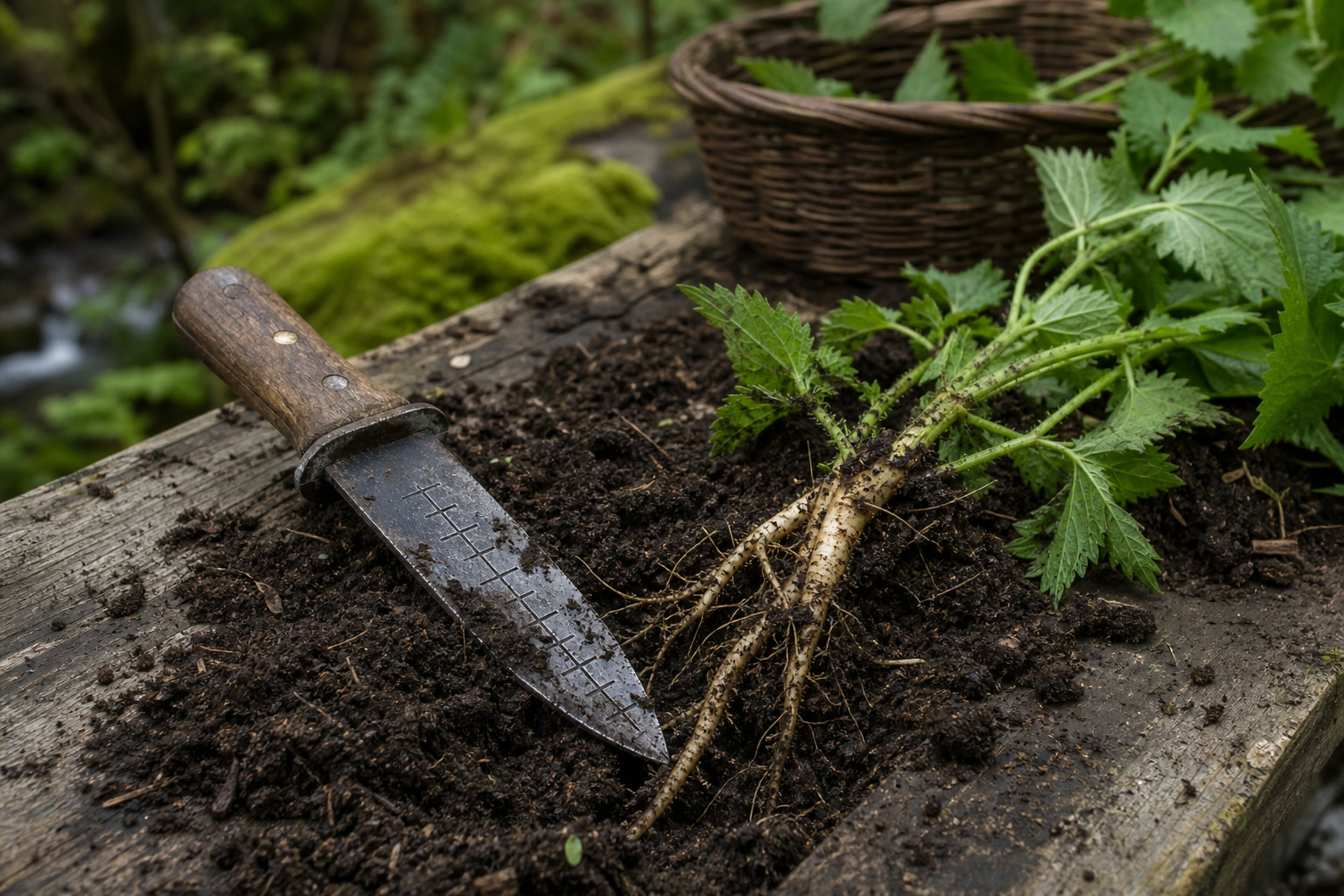
For anything below the soil line, I use a Nisaku hori-hori. It’s a Japanese soil knife — a heavy stainless blade, serrated on one edge, with depth marks stamped down the face. I have dug nettle root with it every March for twenty years, along with dandelion, dock, and the occasional stubborn burdock that fights back.
A trowel bends. A trowel will not saw through a root or pry a taproot out of the rocky glacial till we have up here. The hori-hori does both, and the serrated edge will cut through blackberry cane when I need to clear a path to the good patch.
Buy the one with a sheath. The blade is sharp enough to take a slice out of your leg when you sit down to rest, which I learned the way you’d expect.
Gloves with a long cuff
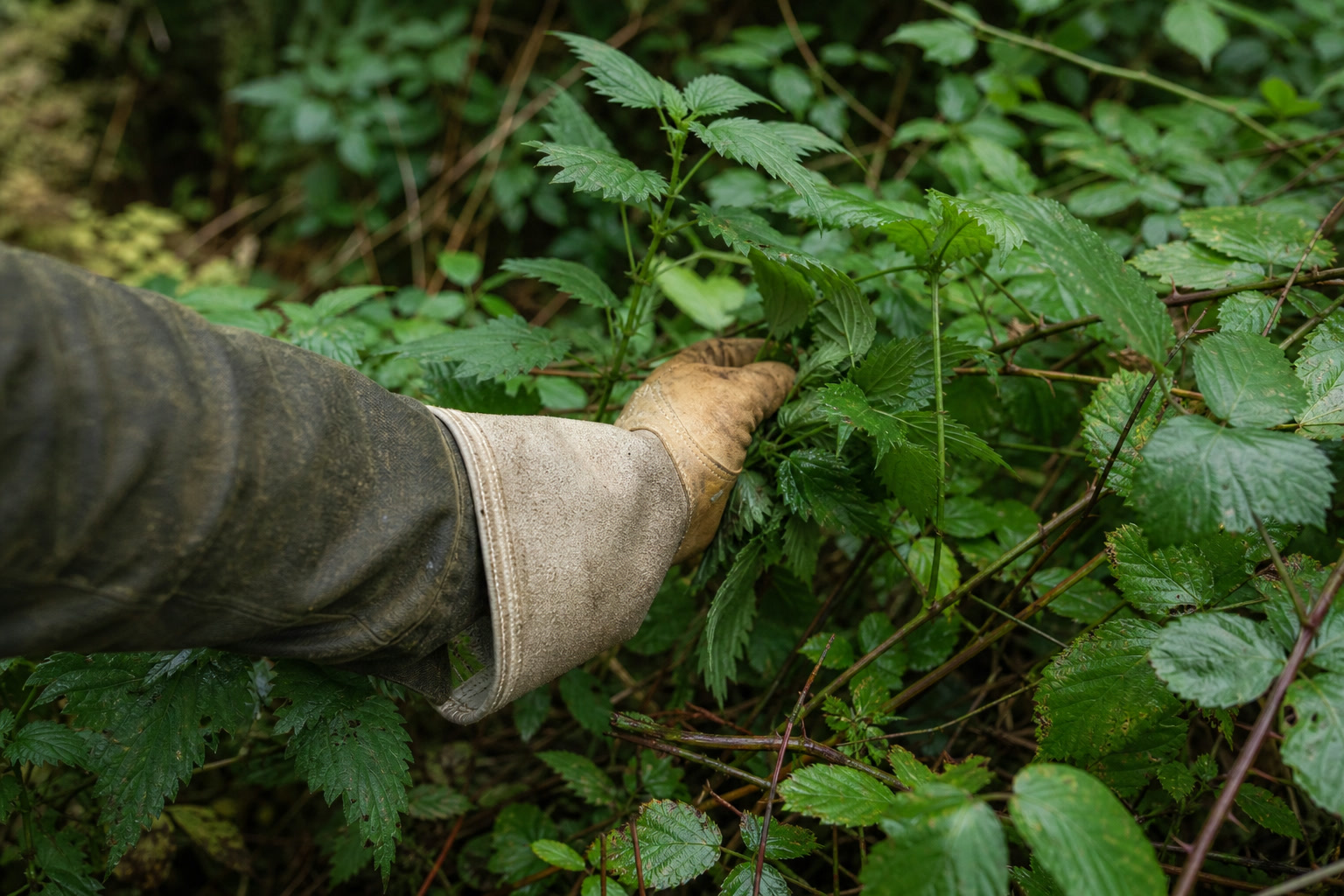
Most garden gloves stop at the wrist, which is exactly where the trouble starts. I wear goatskin gauntlet gloves — the kind sold for pruning roses, with a stiff split-leather cuff that runs halfway up the forearm.
Nettle is the obvious reason. So is blackberry. But the real argument for the long cuff is devil’s club, which grows in the wet draws below the foothills and will lace your forearms with spines that fester for a week if you reach past it carelessly. A glove that ends at the wrist does nothing against a plant that’s chest-high and angry.
These are not the gloves for fine work — you can’t feel a thing through goatskin. I keep them for the rough harvest and pull them off for everything delicate.
A loupe — because identification is the whole job
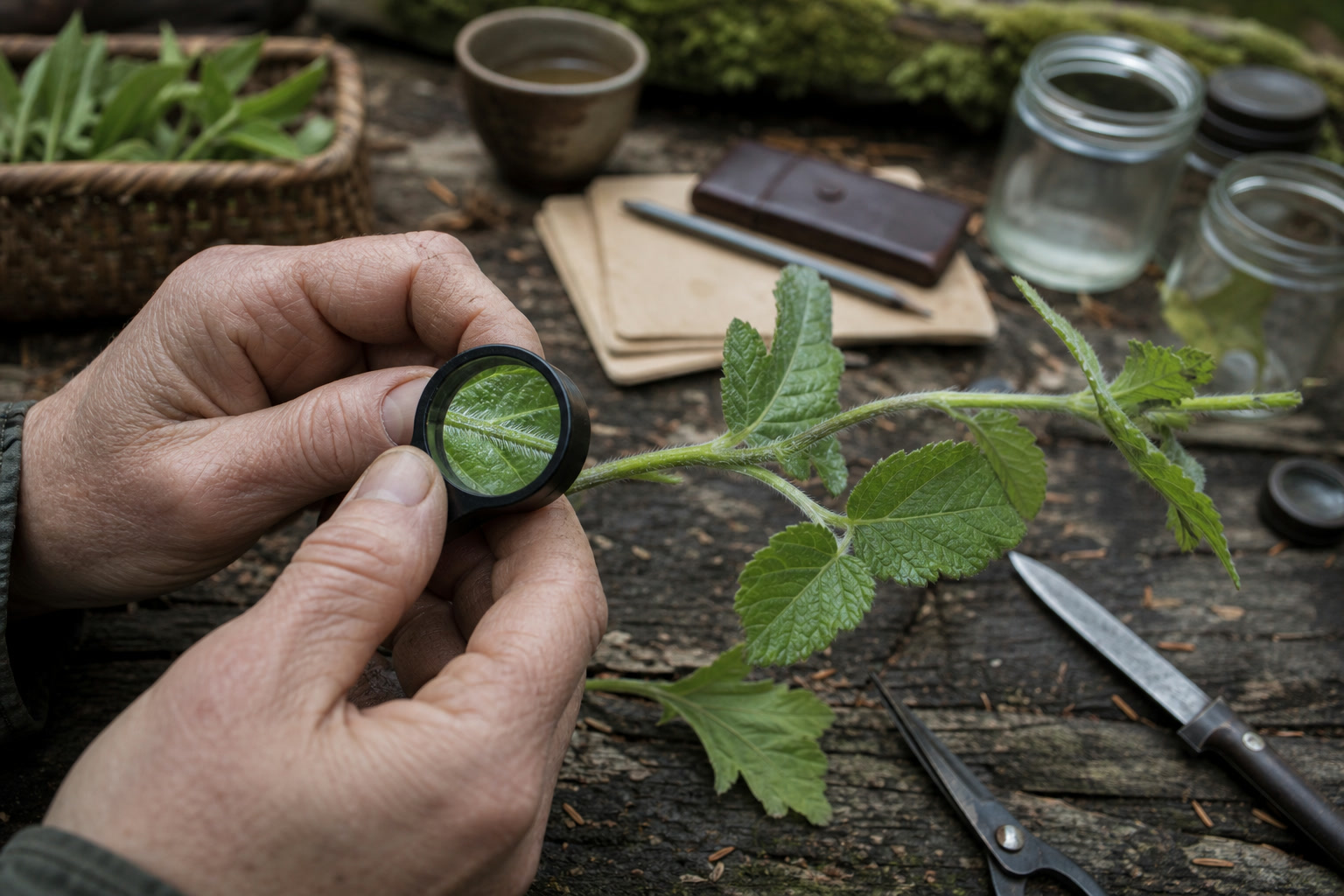
This is the cheap tool that matters most. A 10× jeweler’s loupe costs a few dollars and lets you actually see the things that separate a plant you want from a plant that will hurt you: the hairs on a stem, the shape of a seed, the tiny structures where an umbel meets its stalk.
Here is the one rule I’ll state plainly, and only once, because I think you can handle it: identify with certainty before anything goes in your mouth, and confirm with more than one source. Two plants on this coast can kill you, and both of them look, to a hurried eye, like something you’d want to eat. The loupe is how you slow down enough to look. Trust your identification. Intuition is what gets people hurt.
The garden hod (the one that’s just for pretty pictures)
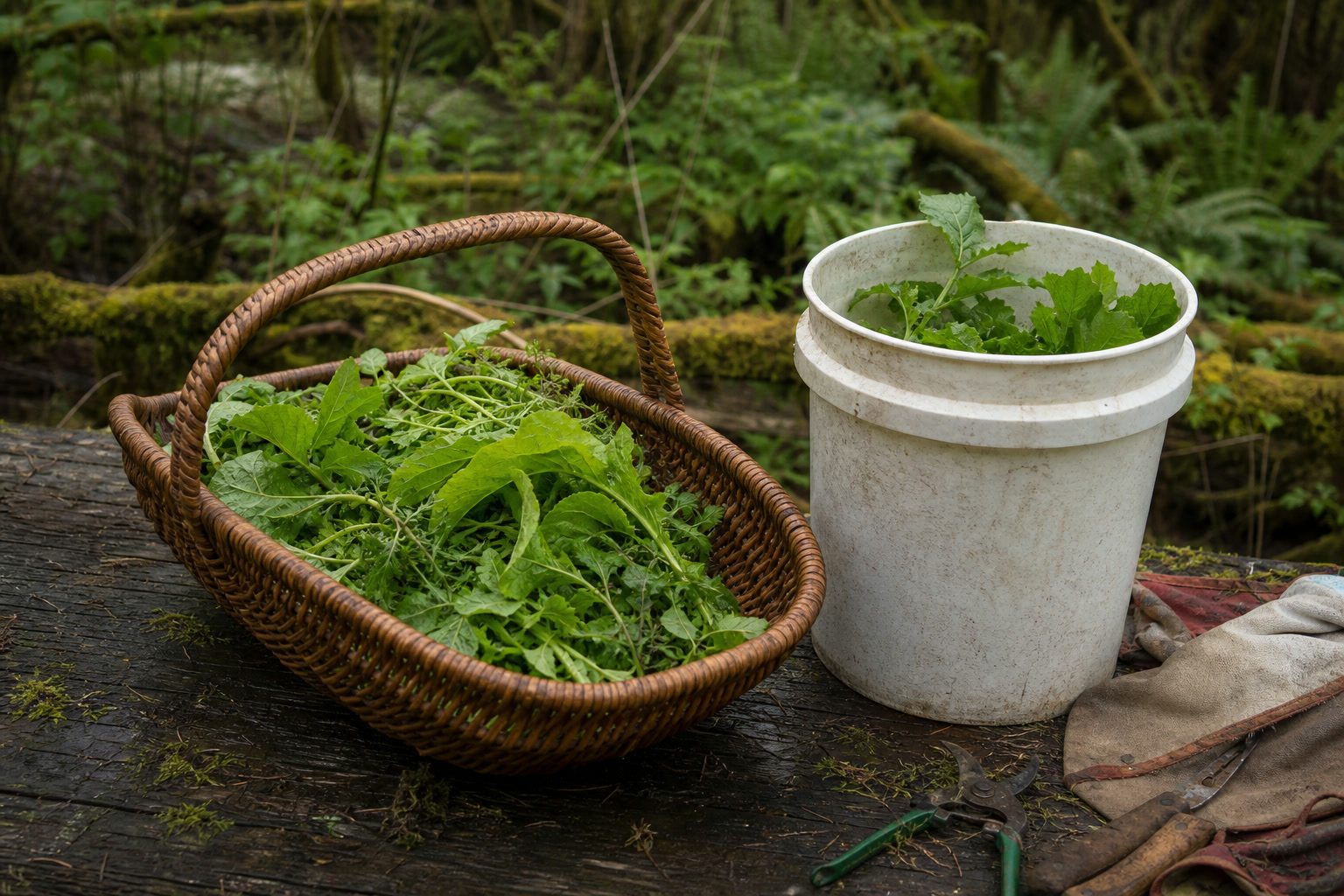
I’ll be honest with you. A Maine garden hod — a wooden trug with a wire-mesh bottom — is not a tool I strictly need. A five-gallon bucket carries more. A mesh bag weighs nothing and folds into a pocket.
But the hod doesn’t crush a layer of soft nettle tops under its own weight the way a bucket does, and the mesh lets me hose the day’s grit off the harvest before it ever comes inside. Those are real reasons. They are also not quite enough to explain why I own one.
The rest of the reason is that it’s lovely, and after thirty years I’ve decided I’m allowed one tool I keep partly because it makes the work feel like something. Some of you will understand that immediately. The rest of you should buy the bucket.
Where the tools stop and the knowing begins
Good gear gets you into the woods and keeps you from hurting yourself. It does not tell you which plant is which, or when to harvest it, or what to do with it once it’s drying on your counter. That part takes longer, and it’s the part I care most about.
It’s also most of what I put into my book, Pacific Northwest Medicinal Plants — 115 wild herbs of this coast, how to identify each one without guessing, when to gather it, and how to use it the way my grandmother’s generation did. The tools get you out the door. The book is how you come home with the right plant.
